

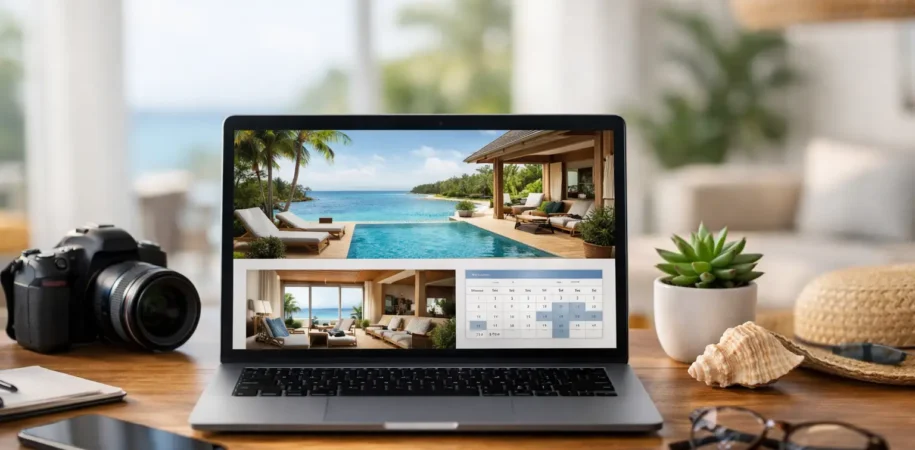

A guest can fall in love with a vacation rental in seconds, then leave just as quickly if the website makes basic details hard to find. Website design for vacation rentals is not about putting attractive photos on a page. It is about giving travelers the confidence to choose your property, check availability, and book without hesitation.
For owners and property managers in New York and across the US, a professional rental website can reduce dependence on third-party booking platforms, support direct reservations, and turn a single property or growing portfolio into a recognizable hospitality brand. The design has to do more than look polished. It must answer the questions guests ask before they ever contact you.
Why Vacation Rental Websites Need a Different Approach
A vacation rental site is part hospitality brochure, part booking engine, and part customer service desk. A local service business may only need a visitor to submit a form. A rental website has a more demanding job: it must help a guest compare dates, understand the property, trust the host, and complete a transaction.
That means the homepage cannot lead with vague marketing language or bury the essentials below oversized banners. Guests need a clear picture of what they are booking. They want to know where the home is located, how many people it sleeps, what makes it special, whether it fits their travel dates, and what the total cost may be.
The strongest websites create momentum. A visitor sees the experience first – the view, the pool, the walkable neighborhood, the family-friendly layout, or the proximity to the beach – then finds the practical information needed to move forward. Beautiful design earns attention. Clear structure earns bookings.
The Elements That Turn Browsers Into Guests
Every rental is different, but the most effective booking-focused sites make the next action obvious from the first screen. A high-quality image or short video can set the mood, but it should be paired with the property name, location, guest capacity, and a visible availability or booking button.
Make availability easy to find
Do not make potential guests search through multiple pages to discover whether a property is open. Place availability and booking access prominently in the header, on individual property pages, and near key calls to action. If you use a property management system or channel manager, the website should connect to it accurately so guests are not looking at outdated calendars.
Direct booking capability is especially valuable for owners who want more control over guest relationships and lower platform fees. Still, the setup must be handled carefully. A booking system that feels confusing, slow, or suspicious can cost more reservations than it creates. The right choice depends on your number of properties, existing software, payment process, and how much operational control your team needs.
Use photography as proof, not decoration
Rental guests make emotional decisions visually, but they also use photos to assess reality. Show the exterior, bedrooms, bathrooms, kitchen, living spaces, work areas, outdoor amenities, parking, and meaningful details. If the property claims to be ideal for remote workers, show the workspace. If it is close to a beach or ski lift, visually establish that advantage.
Avoid galleries that contain only dramatic wide shots. A guest who cannot see the bathroom, sleeping arrangements, or kitchen may assume there is a reason. Professional photography is one of the highest-value investments a rental operator can make, but the website must organize those images intelligently rather than forcing visitors through a long, uncaptioned slideshow.
Write property details for real decisions
A property description should create interest while removing doubt. Instead of saying a home is “perfect for everyone,” explain who will enjoy it and why. Mention the number of bedrooms and beds, bathroom setup, accessibility considerations, pet policies, parking, check-in process, neighborhood character, and standout amenities.
Specificity prevents mismatched bookings. A couple planning a quiet weekend has different priorities than a family traveling with children or a corporate group needing reliable Wi-Fi. Clear copy helps the right guests book and reduces avoidable questions before arrival.
Build trust before requesting payment
Travelers are cautious when they book directly through an unfamiliar website. Your design must make the business behind the property feel legitimate and accessible. Display clear contact information, management or host details, policies, guest reviews, secure payment messaging, and professional branding throughout the site.
Reviews should feel connected to the property experience, not dropped onto a page as an afterthought. A testimonial that mentions a spotless kitchen, responsive host, smooth check-in, or accurate listing details can answer objections better than generic five-star statements.
Website Design for Vacation Rentals on Mobile
Many guests browse rental options while commuting, sitting at an airport, or planning with family from a phone. If your site looks excellent on a desktop but makes visitors pinch, zoom, or fight through tiny booking fields on mobile, it is leaving revenue on the table.
Responsive website design for vacation rentals means more than shrinking a desktop layout. Buttons must be comfortably tappable. Image galleries must load quickly. Menus must stay organized. Date pickers and forms must work without frustration. The most important details – rate information, availability, sleeping arrangements, location, and booking actions – should remain easy to reach on a smaller screen.
Speed matters just as much. High-resolution property images can slow a site down when they are uploaded without optimization. The goal is not to reduce visual quality until a rental looks generic. It is to use the right image formats, sizing, caching, and development practices so the pages feel fast while still presenting the property at its best.
Design the Booking Journey, Not Just the Pages
A rental website should guide guests through a logical sequence. First, help them understand the experience. Next, give them the facts to evaluate it. Then make it simple to check dates, ask questions, or reserve.
Before launch, test the entire journey from a guest’s point of view. Can a first-time visitor quickly find the following?
- Available dates and minimum-stay requirements
- Total guest capacity and bed configuration
- Accurate rates, fees, and cancellation policies
- Location context and nearby attractions
- A direct way to book or contact the property manager
This review often reveals gaps that are easy to miss when you know the business too well. For example, owners may assume every guest understands a self-check-in process or knows what a neighborhood name means. A visitor from another state may need a map, airport distance, transit information, or a clear explanation of parking.
The same thinking applies to inquiries. A simple contact form is useful, but it should collect enough information to help your team respond efficiently, such as preferred dates, guest count, and the property of interest. Do not turn it into a long questionnaire. Guests who are ready to travel expect timely answers.
SEO That Brings the Right Travelers to Your Site
A well-designed site needs search visibility to generate consistent traffic beyond repeat guests and social media. Search engine optimization for vacation rentals starts with pages that clearly communicate what and where you offer.
A single generic page for all properties may be enough for a small operation, but individual property pages usually provide better opportunities to rank for specific searches. A beachfront home, Hudson Valley cabin, Brooklyn short-term rental, or Long Island family getaway each serves different search intent. The page content should reflect the actual property and destination without stuffing location phrases into every sentence.
Helpful local content can support visibility too. Guests often search for nearby activities, wedding venues, seasonal events, restaurants, beaches, hiking, or travel tips before choosing where to stay. The key is relevance. Publish content that helps your actual guests plan a trip, not filler pages written only to chase rankings.
Technical SEO also affects booking potential. Search engines and users respond better to sites that are secure, fast, mobile-friendly, accessible, and structured clearly. A polished visual redesign without attention to performance and page structure can create problems that are invisible at first but costly over time.
Choose a Platform That Supports Growth
The right platform depends on how your rental business operates. WordPress can be an excellent fit for businesses that need flexible property pages, custom content, local SEO, and integrations with booking tools. Shopify may make sense when a hospitality business also sells products, gift cards, merchandise, or packaged experiences. In some cases, a specialized property management platform should handle reservations while the main website delivers the brand and search experience.
There is no benefit in forcing a rental business into a platform because it is popular. The better question is whether the system supports your booking workflow, team, marketing plans, and future expansion. A one-property host may need simplicity. A manager with 20 units needs reliable calendar synchronization, scalable templates, reporting, and role-based access.
SHAH-TECH approaches these decisions as business decisions first, then translates them into the right UX/UI design, responsive development, SEO structure, and ongoing support plan. The objective is a site your team can use confidently after launch, not a beautiful project that becomes difficult to maintain.
Your property already has a story travelers want to experience. Give them a website that makes the decision to book feel clear, credible, and worth acting on.